
Case studies · 02
SKYLAB
Building a software and venture business around specialist talent
SKYLAB was created by Digital SHIFT founder Marc Thornton to pursue work that sat beyond the conventional agency model: bespoke software, new products, venture partnerships and investment-ready ideas. It grew into a profitable business and, for part of its life, a 13-room Centre for Innovation designed to put founders, specialists and clients in the same environment.
- Project provenance
- Venture / product
- Delivery context
- Founder-led business heritage · Separate company created alongside Digital SHIFT
- Period
- 2015–2023
- Disciplines
- Featured · Commercial · Community · Development
At a glance
SKYLAB
How Digital SHIFT founder Marc Thornton built SKYLAB into a profitable software and venture business, including a 13-room Centre for Innovation.
At a glance
- £713,000: turnover in the final 18-month reporting period
- £346,000: pre-tax profit in that period
- 81%: gross margin
- 30+: staff, contractors, founders, coworkers and specialists operating through the Centre at its peak
The full story
Building a software and venture business around specialist talent
SKYLAB grew from a simple question: what could we do with the capability and profits of a successful agency if we deliberately reinvested them into more ambitious digital products and ventures?
Digital SHIFT already had clients, a multidisciplinary team and strong commercial foundations. Marc wanted a second model for projects that needed more than a conventional supplier relationship. The aim was to bring technology specialists, creatives, founders and established businesses closer together, then use that proximity to turn difficult ideas into products, investment propositions and new companies.
SKYLAB was incorporated in April 2015. At the same time, the physical operation was expanding rapidly. What had begun with three desks inside another agency eventually grew into control of a 13-room Grade II-listed building under a five-year lease.
Across Digital SHIFT and SKYLAB, approximately £240,000 was invested in transforming the deteriorated building into the SKYLAB Centre for Innovation. Marc negotiated the lease and coordinated the refurbishment, contractors, access, security, commercial model, brand and promotion. The building gained professional video, photography and audio facilities, meeting rooms, offices and coworking areas alongside a distinctive interior created around the SKYLAB identity.
The point was not to build a conventional coworking centre. It was to make useful collisions more likely.
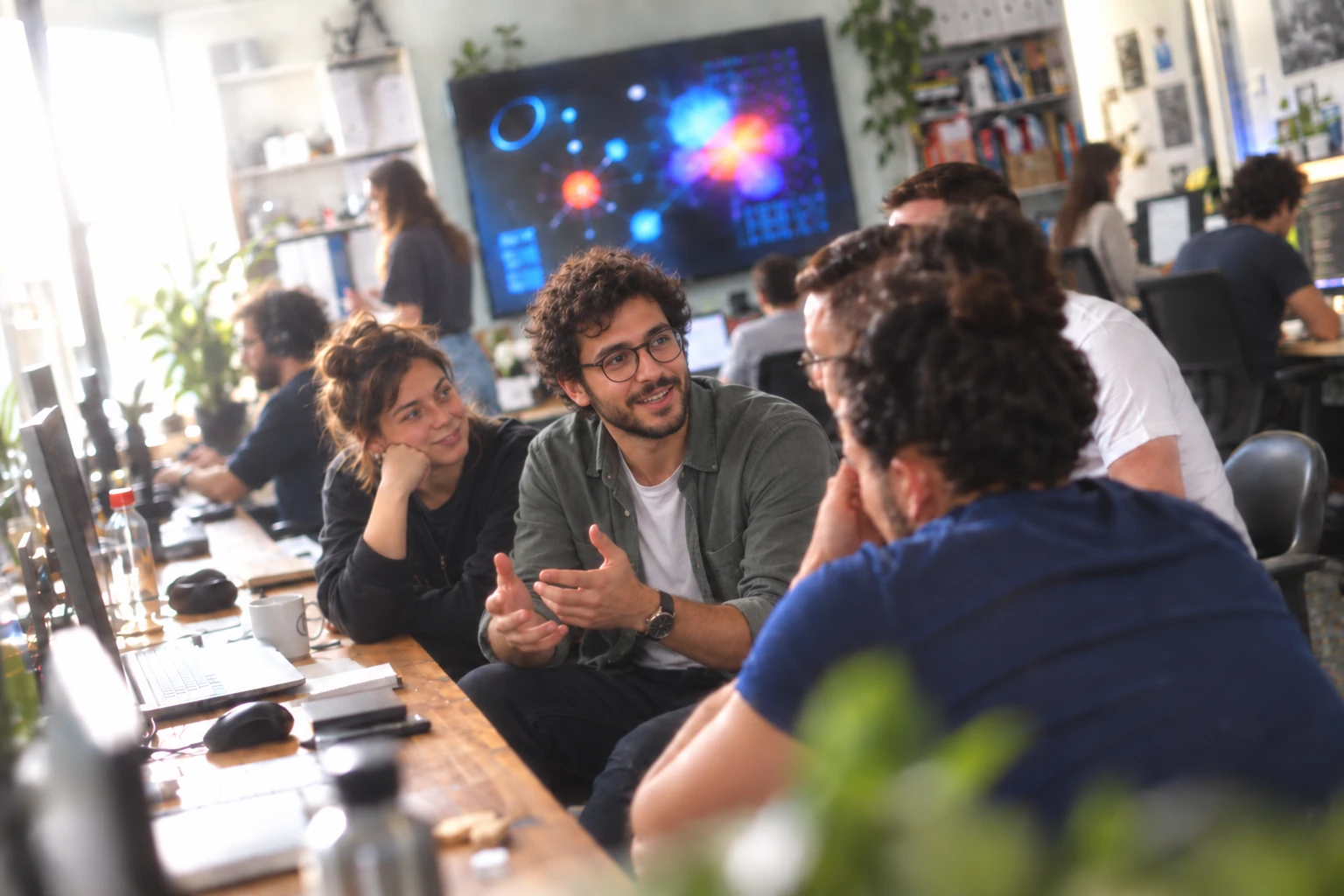
Permanent teams worked alongside developers, designers, filmmakers, photographers, founders and other specialists. Some rented space; others joined projects when their expertise was needed. Shared facilities, events and communal areas made it easier for businesses to access capabilities that would have been expensive to maintain alone.
The physical model also supported the commercial one. Rental income helped carry the infrastructure, while the concentration of talent made it easier to form project teams around specific problems. Roughly halfway through the intended five-year lease, the original investment had effectively reached payback and the Centre had become profitable in its own right.
SKYLAB itself increasingly focused on bespoke software, intellectual property, product development and arrangements where the commercial upside could be shared rather than simply billing for hours.
ClickASnap is one example. Marc negotiated a significant equity-for-development arrangement that aligned the team more closely with the platform’s long-term growth. Hollabox is another: the founders arrived with an idea and Photoshop concepts, and SKYLAB helped turn those into product flows, a working early version and an investment proposition. By late 2016, Hollabox had secured its first £100,000 of funding for version two and later attracted investment from Just Eat.
Marc’s role sat between commercial strategy, product direction and specialist execution. He handled pricing, proposals, tenders, client relationships, UX and UI direction, recruitment, research, roadmaps and investor preparation. When work needed deeper expertise, he brought in specialists rather than pretending one team member could cover every discipline.
That approach is still central to Digital SHIFT: understand the business problem well enough to assemble the right capability, challenge assumptions and keep the work moving towards a useful result.
The physical Centre ended in 2017 after control of the building passed to a new long-term commercial operator. Marc chose not to recreate it elsewhere. The clients, specialist network and venture model continued without the property component, and SKYLAB’s financial performance subsequently became stronger.
In its final 18-month reporting period, SKYLAB recorded £713,000 turnover, £346,000 pre-tax profit and an 81% gross margin. Marc later concluded the business through a planned Members’ Voluntary Liquidation when relocating permanently to France.
The lasting value of SKYLAB was not the building itself. It was the operating model: combine commercial judgement, product thinking and flexible specialist talent, then structure the relationship around the outcome rather than around a fixed list of agency services.
Something to untangle?
Let’s discuss the real problem.
If this case study sounds close to a situation you are facing, send me a short outline.
Email Marc