
Case studies · 18
MRI Studio
Turning a personal problem into a working medical imaging research prototype.
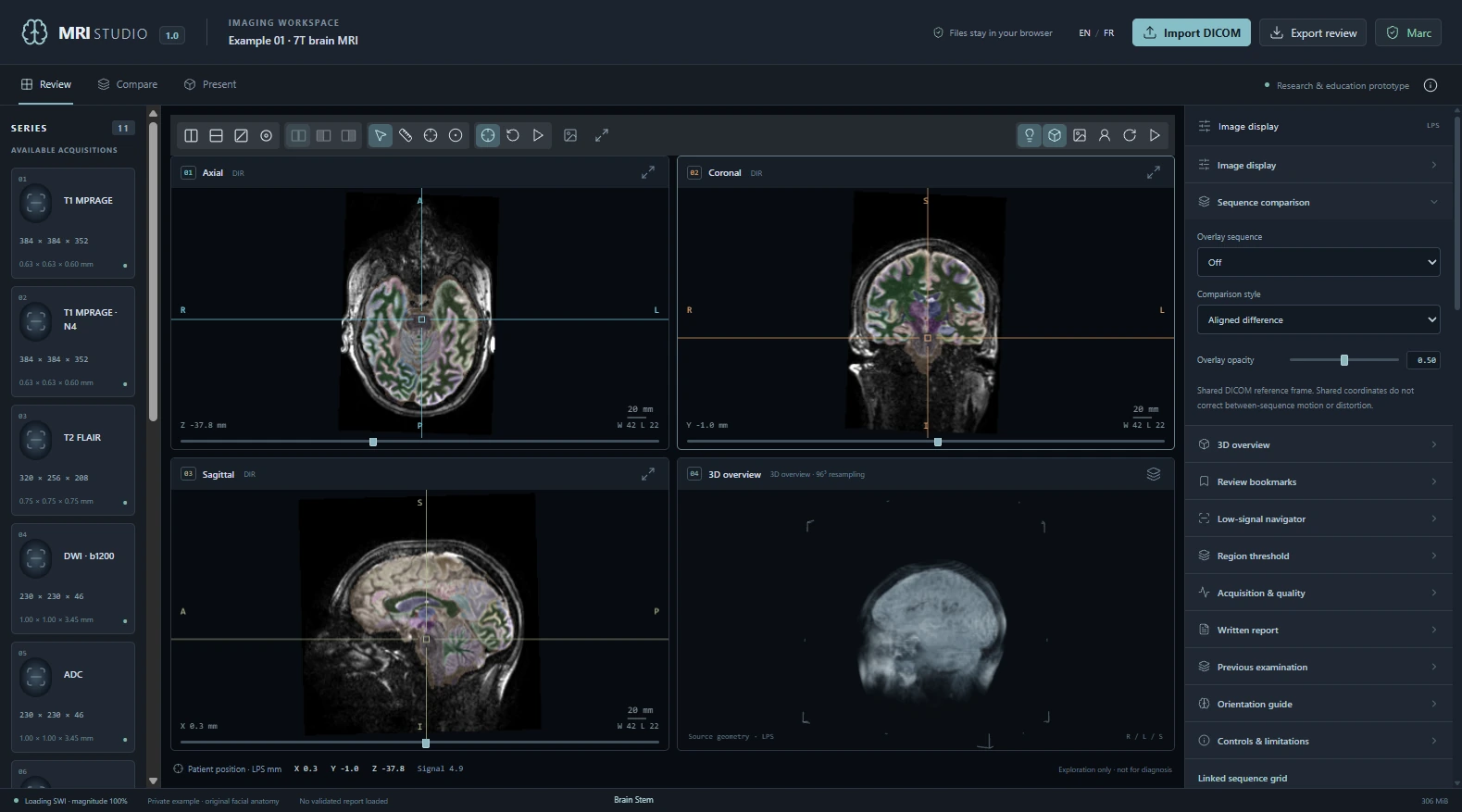
Digital SHIFT founder Marc Thornton turned a personal MRI examination into MRI Studio, a working browser-based imaging workstation combining spatial 3D review, multi-sequence navigation and exploratory AI tools.
- Project provenance
- Independent / collaborative R&D
- Delivery context
- Independent, founder-led product R&D
- Period
- October 2026
- Disciplines
- Product strategy, UX/UI, software development, 3D visualisation, applied AI, data processing
At a glance
MRI Studio
How Marc Thornton turned personal MRI data into a working 3D medical imaging research prototype, combining product design, scientific processing and applied AI.
Problem
A personal MRI dataset was difficult to navigate meaningfully without specialist workstation software while the clinical report was still pending.
Intervention
Marc built a browser-based, multi-sequence imaging prototype with linked 2D and 3D views, measurement, anatomical overlays and exploratory AI segmentation.
Outcome
A functioning independent research prototype that demonstrates product, scientific-data and applied-AI capability. It is neither a commissioned client project nor a clinically approved diagnostic product.
The full story
Turning a personal problem into a working medical imaging research prototype.
When Digital SHIFT founder Marc Thornton received the raw data from a cerebral MRI examination, the accompanying medical report was still weeks away.
The immediate problem was straightforward: how could a patient meaningfully explore complex medical imaging data without specialist workstation software?
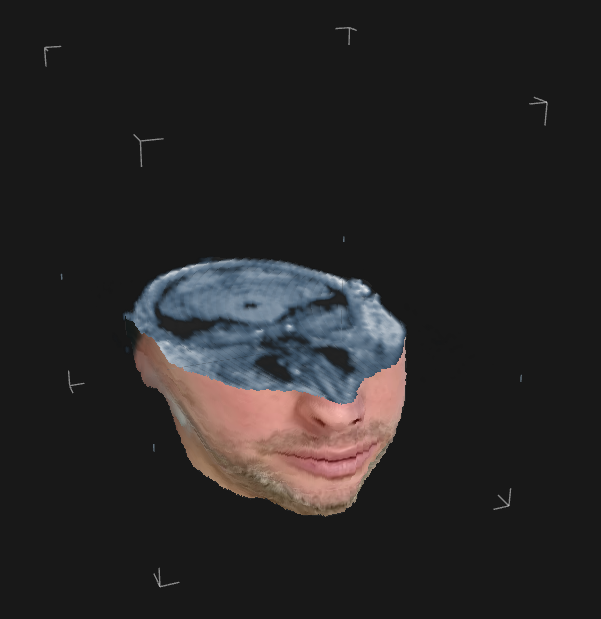
Rather than treating the images as a collection of individual files, Marc began developing an interactive application that could reconstruct their spatial relationships and make the examination easier to navigate.
The result was MRI Studio, a browser-based medical imaging workstation that evolved from a personal visualisation experiment into a substantial product R&D prototype.
Delivery context: Independent, founder-led product R&D
Period: October 2026
Disciplines: Product strategy, UX/UI, software development, 3D visualisation, applied AI, data processing
From a narrow requirement to a broader product opportunity
The initial objective was simply to explore an MRI examination in three dimensions.
But making the data genuinely useful required solving several connected problems: understanding DICOM acquisition geometry, preserving physical coordinates across different image sequences, providing intuitive navigation, processing large imaging datasets and presenting the results in a manageable interface.
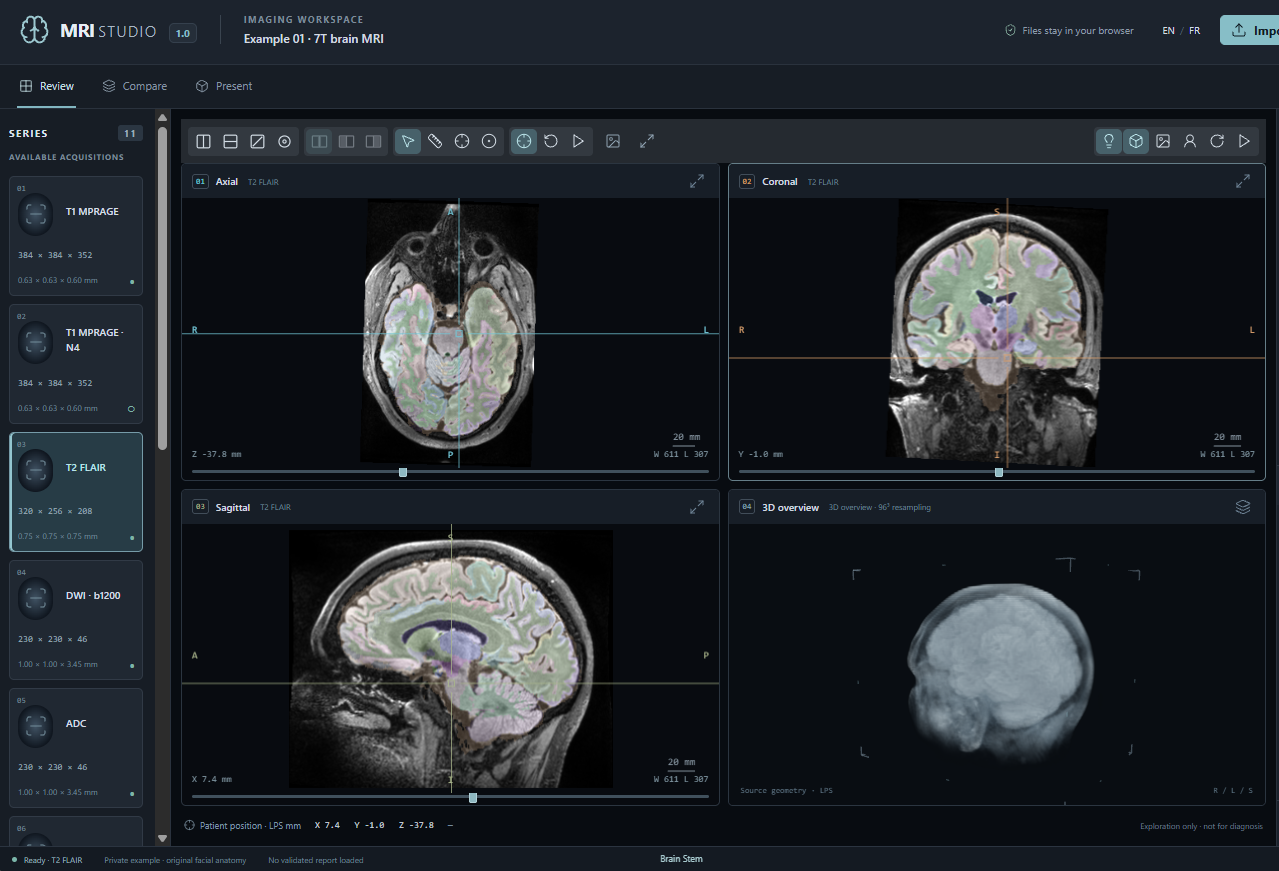
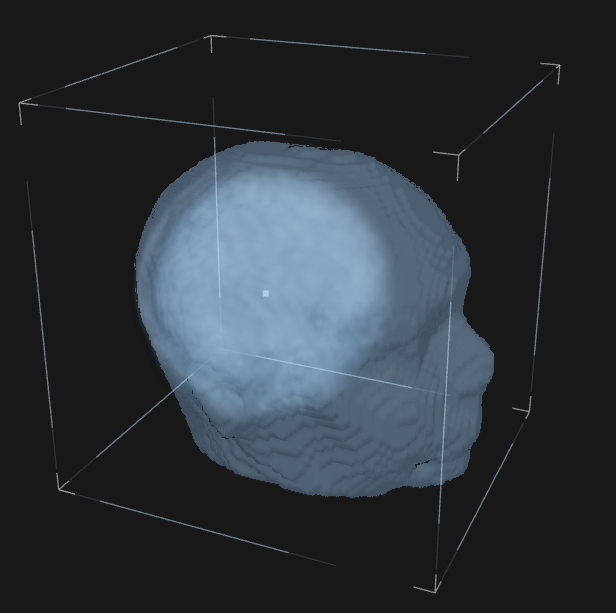
The project developed into a multi-sequence workstation with synchronised 2D views, interactive 3D exploration, measurement tools, anatomical overlays, comparison workflows and structured review notes.
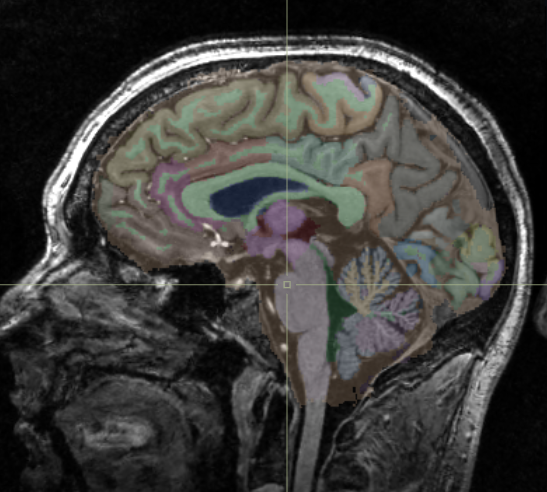
The prototype also integrates pretrained anatomical segmentation models, mapping 99 observed anatomical labels in its demonstration study.
From a technical perspective, MRI Studio combines browser-based interaction through JavaScript and Three.js with Python scientific processing, ONNX-based inference and protected cloud delivery.
The result is a functioning application, rather than a concept presentation or design mock-up.
Identifying the opportunity beyond the original problem
As the prototype matured, a more significant opportunity emerged.
Medical imaging is only one part of a larger information problem. Patient histories, previous examinations, clinical reports and other records often exist across different systems and formats.
Bringing those sources together in a coherent review environment could make clinical evidence easier to navigate and assess.
Future development could combine governed medical-record retrieval, validated image-analysis models and source-linked observations within a single workspace.
Rather than presenting AI-generated conclusions as unquestionable answers, the product direction centres on helping qualified reviewers inspect supporting evidence, evaluate suggested findings and retain control over decisions.
This would require independent clinical validation, appropriately licensed datasets and models, robust privacy controls and medical-device regulatory assessment before diagnostic deployment.
What this demonstrates
MRI Studio illustrates the approach behind Digital SHIFT's independent product and technology work:
Start with a real problem. Understand the underlying information. Build a practical solution. Then assess whether solving that problem creates a wider opportunity.
The project combines product discovery, technical architecture, interface design, scientific data processing and applied AI without beginning with a predetermined technology solution.
MRI Studio is currently an independent research prototype, not a commissioned client project or clinically approved medical product.
Its relevance to Digital SHIFT is the capability it demonstrates: taking an unfamiliar, technically demanding problem and turning it into working software that can be tested, evaluated and developed further.
Explore the MRI Studio prototype
Have a complex digital product, data or AI problem that needs experienced attention? Contact Digital SHIFT.
Inside the prototype
Explore MRI Studio
Something to untangle?
Let’s discuss the real problem.
If this case study sounds close to a situation you are facing, send me a short outline.
Email Marc